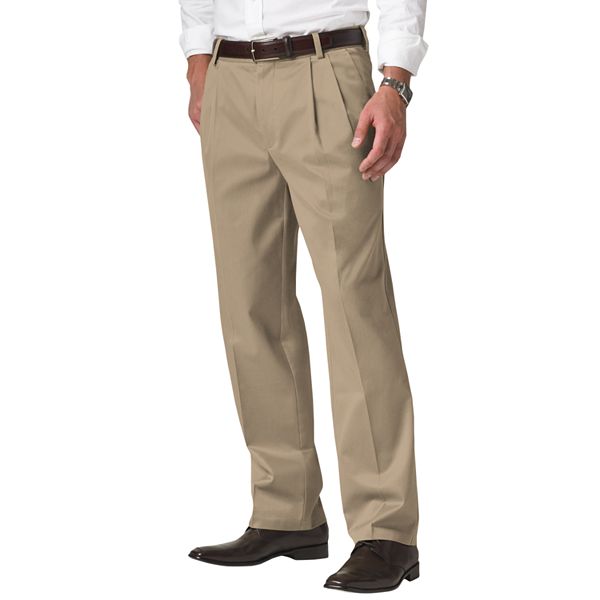
Jeans are not the appropriate answer for every occasion in a man’s life, no matter how much he’d like that to be the case. There is a huge range of dress pants available that will make getting dressed for special occasions, work or formal events more pleasurable. Here are some of the elements of good dress pants.
Front Style
The two most popular options are pleated or flat. Pleated pants are more comfortable for men with larger thighs, but they also require a cuff at the bottom for weight. Flat-front pants are the current trend, but they look best on men with thinner legs. They don’t require cuffs, though plenty are available that have them.
Cuffs
These often are included or left off based on the front style of the pants and the height of the wearer. Cuffs are best on pleated pants or for tall men. Short men often choose to go without cuff to elongate the look of the leg.
Pockets
Dress pants almost universally have slash pockets in the front, providing an angles opening to the pocket. In the back, there are patch pocket or slit pocket options, though slit pockets are the most common. Sometimes these pockets include a button enclosure, but not always.
Closure
The two main options here are button fly or zipper, though zippers are much more commonly chosen for their flat appearance and more formal look. Shoppers should be sure to look at this feature before making their purchase, lest they get a surprise when they get home.
Fit
As in the pleated-versus-flat front debate, the ideal fit of dress pants will depend largely on the shape of the wearer. Larger men are likely to want additional room, so they would go with a wide leg. Slimmer men might choose a flat front with a slim leg to flatter their lanky frame. Again, the current trend calls for a slimmer leg with no cuffs.
Sizing
Most men looking to purchase dress pants will automatically home in on the same size they wear in jeans. However, this is not the ideal approach. Most dress pants will not require the additional length commonly found in jeans. Also, because the fabric of dress pants is less likely to stretch than denim, a bigger waist size might be in order. Men who want to get proper sizing for their dress pants should be measured by a professional, such as a tailor, or be prepared to try on various pairs of dress pants to find the most comfortable and flattering fit.
These are some very basic tips on understanding how dress pants can accommodate different men based on their sizing, and requirements. It is true indeed that jeans are not the answer for everything even though we might like that to be the case. There is a different kind of comfort felt when wearing pants, and wearing one can only experience that.